
The best discounts this week
Every week you can find the best discounts here.
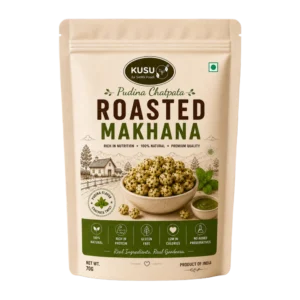
KUSU Pudina Chatpata Roasted Makhana
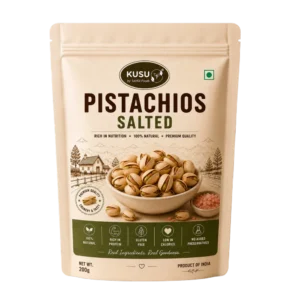
KUSU Pistachios Salted
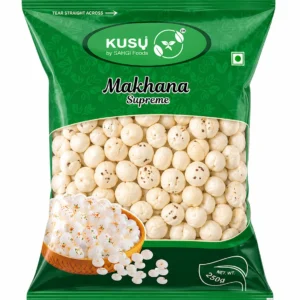
KUSU Makhana Supreme
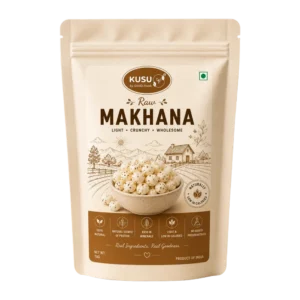
White Raw Makhana (5 Plus)
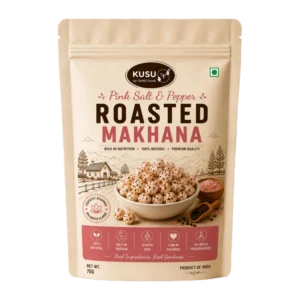
KUSU Pink Salt and Pepper Roasted Makhana
White Raw Makhana (4 Plus)
How Makhana is Made: From Bihar’s Ponds to Your Bowl
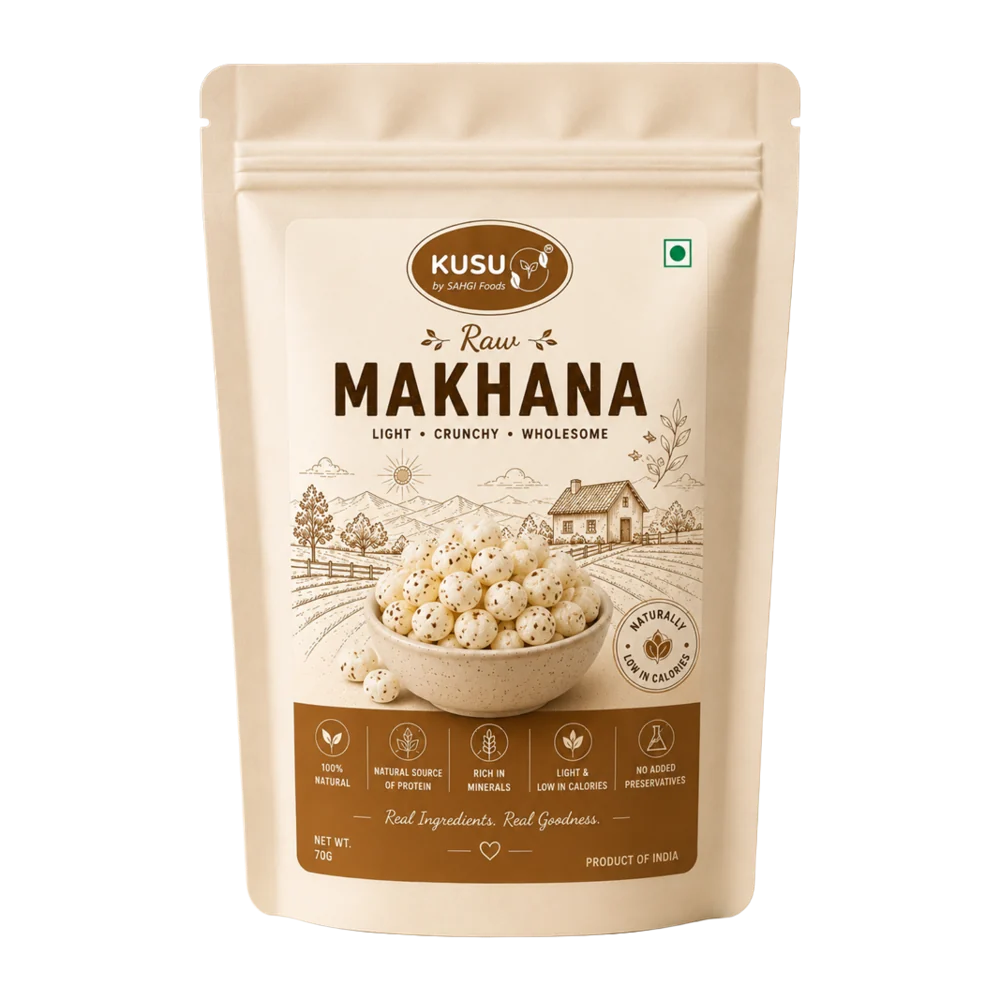
Before it reaches your bowl, every makhana travels a remarkable road. Here is how makhana is made – from the ponds of Bihar to the sealed pack at your door.
Where makhana grows
Over 85% of the world’s makhana comes from the shallow ponds and wetlands of north Bihar – Darbhanga, Madhubani, Purnia. The prickly water lily (Euryale ferox) drops its seeds into the pond bed, where they mature underwater.
The underwater harvest
Skilled farmers dive with baskets, sweeping the pond floor by hand to collect the hard black seeds – physically demanding work done largely the same way for generations.
Drying, heating, popping
The seeds are washed, sun-dried, then roasted in hot pans. A precise strike cracks the shell and the kernel bursts into the white puff we call makhana – think popcorn, but requiring far more skill.
Sorting and grading
Pops are sorted by size and colour. The biggest, whitest pops become 5+ and Supreme grades; smaller ones go to standard packs. Hand-sorting removes broken and discoloured pieces.
Cleaning and packing
At SAHGI Foods we source graded makhana directly, then pack in sealed, resealable pouches – no fumigation shortcuts, no months in open gunny bags. That is why KUSU makhana smells neutral and snaps clean.
Why origin matters
Makhana that sits in humid godowns turns chewy and dull. Short, direct supply chains preserve crunch – one more reason to buy from a brand that names its source. Curious about the nutrition this process preserves? See the full breakdown.
From Bihar’s ponds, sorted by hand, sealed fresh.
Frequently Asked Questions
Is makhana the same as lotus seed?
Commonly called lotus seed, it is technically the seed of Euryale ferox, a water lily – the name stuck.
Why is makhana expensive?
Diving harvests, hand-popping and strict grading are labour-intensive; only part of each harvest makes premium grade.
Is makhana GI-tagged?
Yes – Mithila Makhana received a GI tag in 2022, recognising Bihar’s unique produce.
Explore SAHGI Foods — FAQs & Quick Links
Frequently Asked Questions
What is makhana?
Makhana, also called fox nuts or lotus seeds, are puffed seeds of the Euryale ferox plant, harvested mainly in Bihar, India. They are a light, crunchy, protein-rich snack that is naturally gluten-free and low in calories.
Is makhana good for weight loss?
Yes. Makhana is low in calories, high in protein and fibre, and keeps you full longer. Roasted makhana is a healthier alternative to fried snacks like chips.
What is 5 Plus or Supreme grade makhana?
Makhana is graded by pop size. 5 Plus and Supreme are the largest, whitest and crunchiest fox nuts with fewer broken pieces. SAHGI Foods sources these premium grades directly from Bihar.
How long does delivery take?
Orders are dispatched within 1 to 2 business days and delivered in 3 to 7 business days across India. You get tracking details by email once the order ships.
What is the shipping cost at SAHGI Foods?
Shipping is a flat Rs.99 across India and completely FREE on orders above Rs.1,400.
Do you deliver across India? Is COD available?
Yes, we deliver pan-India and cash on delivery is available. Orders are freshly packed and dispatched within 1-2 business days.
Can I return a product?
Yes. You can request a return or replacement within 7 days of delivery for damaged, incorrect or quality-affected items. Please notify us within 48 hours with photographs.
Are SAHGI Foods products natural?
Yes. All KUSU products are 100% natural with no preservatives, no artificial colours and no added junk. We only charge for pure food, not fancy packaging.