
The best discounts this week
Every week you can find the best discounts here.
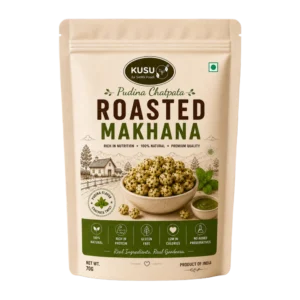
KUSU Pudina Chatpata Roasted Makhana
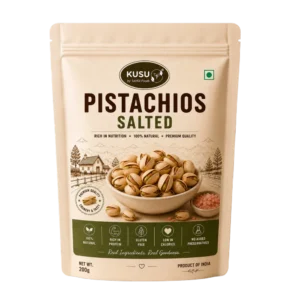
KUSU Pistachios Salted
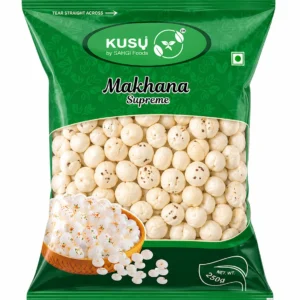
KUSU Makhana Supreme
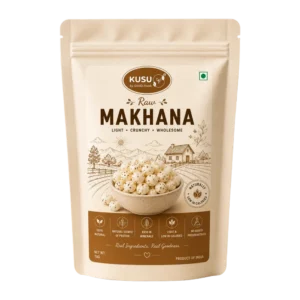
White Raw Makhana (5 Plus)
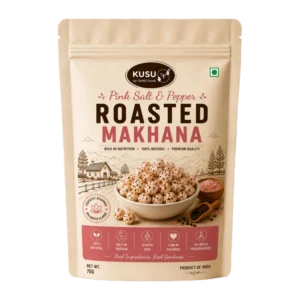
KUSU Pink Salt and Pepper Roasted Makhana
White Raw Makhana (4 Plus)
Buy Makhana Online in India: How to Pick Premium Phool Makhana
Type “buy makhana online” into Google and you get thousands of listings. Same white puffs in every photo, prices anywhere from ₹400 to ₹1,500 a kilo, and no way to tell from a thumbnail what will actually arrive at your door. This guide covers what separates premium phool makhana from the stale, undersized stock that floods online marketplaces, so the next pack you order is one you’d happily reorder.
First, know what you’re buying
Makhana, also sold as fox nuts or popped lotus seeds, comes from the Euryale ferox plant grown mostly in the ponds of Bihar. Farmers harvest the seeds, roast them, and pop them by hand. It takes about 4 kg of raw seed to produce 1 kg of popped makhana, which is why good makhana is never cheap. We’ve written a full breakdown of the process in how makhana is made.
The 4 things that decide quality
1. Size (the grade)
Makhana is graded by pearl diameter. Anything above 12 mm counts as premium; the trade calls these grades “4 Plus”, “5 Plus” and “Supreme”. Bigger pearls are crunchier, whiter and pop evenly when roasted. Smaller grades go into flour and cattle feed, though plenty of sellers still bag them for retail. Our premium makhana grades guide shows the difference side by side. If you want to taste it instead of reading about it, start with White Raw Makhana 4 Plus or 5 Plus.
2. Colour and smell
Fresh makhana is off-white to cream. A yellow or grey tinge means old stock or poor storage. There should be almost no smell from the packet; a musty note means moisture got in, and moisture is what kills crunch.
3. Crunch test
Press one pearl between two fingers. Premium makhana snaps clean. If it bends or crumbles soft, it has absorbed moisture in a warehouse somewhere. You can revive it in a hot pan for a few minutes, but you shouldn’t have to on day one.
4. Price that makes sense
If a listing offers “premium 5 Plus” makhana at ₹500 a kilo, something in that sentence is false. Harvesting is manual, yields are low, and genuine large-grade pearls cost real money at the farm gate. We’ve published a transparent makhana price guide so you know what a fair rate looks like before you add anything to a cart.
Raw or roasted: pick your lane
Buy raw makhana if you cook with it — kheer, curries, or home roasting with your own spices (here’s our roasted makhana recipe if that’s your plan). Buy flavoured roasted makhana if you want to open a pack and eat. Our Peri Peri, Masala Magic and Pink Salt & Pepper packs are roasted the same day they’re seasoned, in 70 g packs sized to finish fresh.
Either way, makhana earns its place as an evening snack: around 347 calories per 100 g, low fat, gluten free, and filling enough to replace fried snacks without a fight. The numbers are on our makhana nutrition facts page, and if weight is the goal, read makhana for weight loss.
Why buy makhana from SAHGI Foods
We’re a Mumbai company that does one thing with makhana: source large-grade pearls directly, pack them fresh, and ship them fast across India. No middle warehouse sitting on stock for eight months. Our KUSU Makhana Supreme is the grade we’d serve at home, and our full shop covers roasted flavours, cashews, almonds and seeds if you’re building a healthy snack drawer in one order. Questions before ordering? The FAQ page answers shipping, COD and freshness, or just contact us.
FAQs
Is it safe to buy makhana online?
Yes, if the seller states the grade, packs in sealed pouches, and ships fresh batches. Avoid listings that don’t mention grade or origin at all.
What is the best makhana grade to buy?
5 Plus or Supreme for eating plain or roasting; 4 Plus is a solid everyday pick for cooking. Below that, quality drops fast.
How long does makhana stay fresh after delivery?
Sealed, 6–9 months. Once opened, move it to an airtight jar and it holds crunch for weeks. Full storage tips in our dry fruits storage guide.
Explore SAHGI Foods — FAQs & Quick Links
Frequently Asked Questions
What is makhana?
Makhana, also called fox nuts or lotus seeds, are puffed seeds of the Euryale ferox plant, harvested mainly in Bihar, India. They are a light, crunchy, protein-rich snack that is naturally gluten-free and low in calories.
Is makhana good for weight loss?
Yes. Makhana is low in calories, high in protein and fibre, and keeps you full longer. Roasted makhana is a healthier alternative to fried snacks like chips.
What is 5 Plus or Supreme grade makhana?
Makhana is graded by pop size. 5 Plus and Supreme are the largest, whitest and crunchiest fox nuts with fewer broken pieces. SAHGI Foods sources these premium grades directly from Bihar.
How long does delivery take?
Orders are dispatched within 1 to 2 business days and delivered in 3 to 7 business days across India. You get tracking details by email once the order ships.
What is the shipping cost at SAHGI Foods?
Shipping is a flat Rs.99 across India and completely FREE on orders above Rs.1,400.
Do you deliver across India? Is COD available?
Yes, we deliver pan-India and cash on delivery is available. Orders are freshly packed and dispatched within 1-2 business days.
Can I return a product?
Yes. You can request a return or replacement within 7 days of delivery for damaged, incorrect or quality-affected items. Please notify us within 48 hours with photographs.
Are SAHGI Foods products natural?
Yes. All KUSU products are 100% natural with no preservatives, no artificial colours and no added junk. We only charge for pure food, not fancy packaging.