
The best discounts this week
Every week you can find the best discounts here.
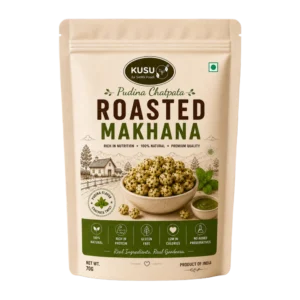
KUSU Pudina Chatpata Roasted Makhana
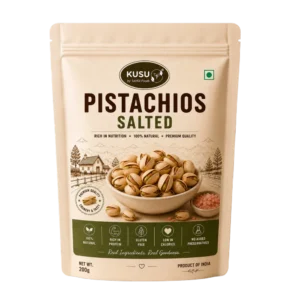
KUSU Pistachios Salted
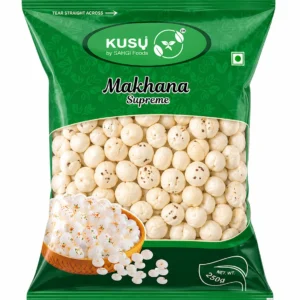
KUSU Makhana Supreme
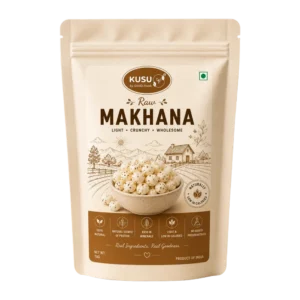
White Raw Makhana (5 Plus)
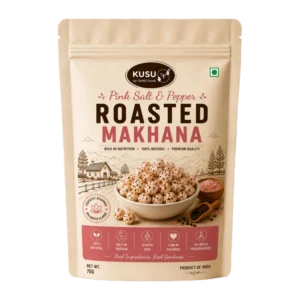
KUSU Pink Salt and Pepper Roasted Makhana
White Raw Makhana (4 Plus)
W180 vs W240 vs W320: Cashew Grades Explained Simply
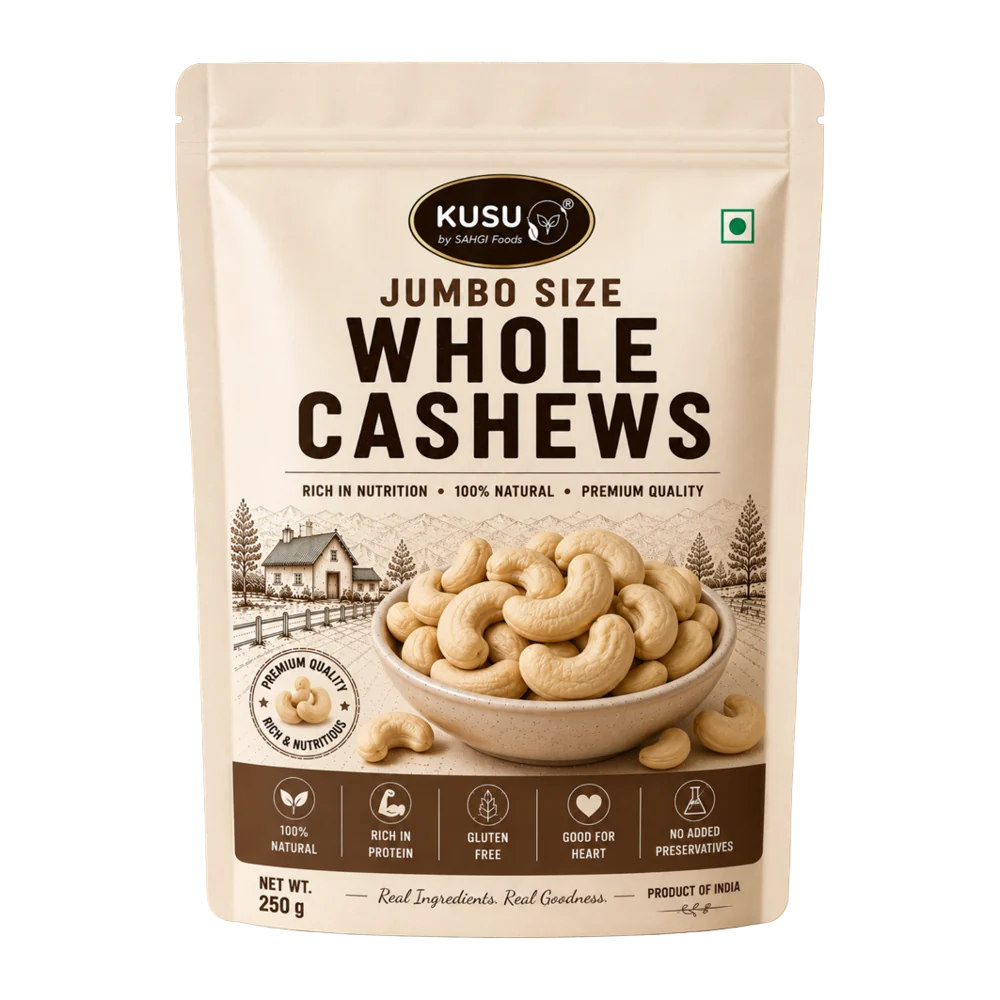
W180, W240, W320 – cashew packets read like engine parts. The code is simple once you know it. Here are cashew grades explained in plain language.
What the W number means
“W” = whole kernels; the number = kernels per pound (454g). So W180 means only ~180 cashews make a pound – each nut is huge. W320 means ~320 smaller kernels. Lower number, bigger nut.
W180: the king size
The largest commercial grade – creamy, substantial, impressive on a party platter. That is our KUSU Jumbo Size Whole Cashew.
W240: the premium middle
Noticeably large, slightly friendlier price. A sweet spot for daily eating with a premium feel.
W320: the everyday whole
The world’s most traded grade – standard-size whole kernels, great for cooking, sweets and regular snacking. Our Natural Whole Cashew serves this role.
What about splits and pieces?
Splits (S) and pieces (LWP/SWP) are broken kernels – fine for gravies and baking, cheaper per kg, but they stale faster. For snacking, whole is worth it.
Which grade should you buy?
Gifting or serving guests: W180. Daily snacking: W240/W320 whole. Cooking and kheer: standard whole or splits. Flavour lovers: skip the decision – our roasted range (salted, buttery, sweet chilli, pudina) uses quality whole kernels. Why cashews deserve a place in your diet at all: 7 benefits of kaju.
From jumbo W180 to small-batch roasted – pick your kaju.
Frequently Asked Questions
Is W180 worth the price?
If cashews are eaten as-is, yes – bigger kernels are creamier and fresher-keeping. For cooking, W320 is smarter.
Why do cashew prices vary so much?
Grade, wholeness, freshness and processing. A W180 whole costs far more to produce than broken pieces.
Are bigger cashews healthier?
Nutrition is nearly identical across grades – the difference is texture, freshness and experience.
Explore SAHGI Foods — FAQs & Quick Links
Frequently Asked Questions
What is makhana?
Makhana, also called fox nuts or lotus seeds, are puffed seeds of the Euryale ferox plant, harvested mainly in Bihar, India. They are a light, crunchy, protein-rich snack that is naturally gluten-free and low in calories.
Is makhana good for weight loss?
Yes. Makhana is low in calories, high in protein and fibre, and keeps you full longer. Roasted makhana is a healthier alternative to fried snacks like chips.
What is 5 Plus or Supreme grade makhana?
Makhana is graded by pop size. 5 Plus and Supreme are the largest, whitest and crunchiest fox nuts with fewer broken pieces. SAHGI Foods sources these premium grades directly from Bihar.
How long does delivery take?
Orders are dispatched within 1 to 2 business days and delivered in 3 to 7 business days across India. You get tracking details by email once the order ships.
What is the shipping cost at SAHGI Foods?
Shipping is a flat Rs.99 across India and completely FREE on orders above Rs.1,400.
Do you deliver across India? Is COD available?
Yes, we deliver pan-India and cash on delivery is available. Orders are freshly packed and dispatched within 1-2 business days.
Can I return a product?
Yes. You can request a return or replacement within 7 days of delivery for damaged, incorrect or quality-affected items. Please notify us within 48 hours with photographs.
Are SAHGI Foods products natural?
Yes. All KUSU products are 100% natural with no preservatives, no artificial colours and no added junk. We only charge for pure food, not fancy packaging.